Parami
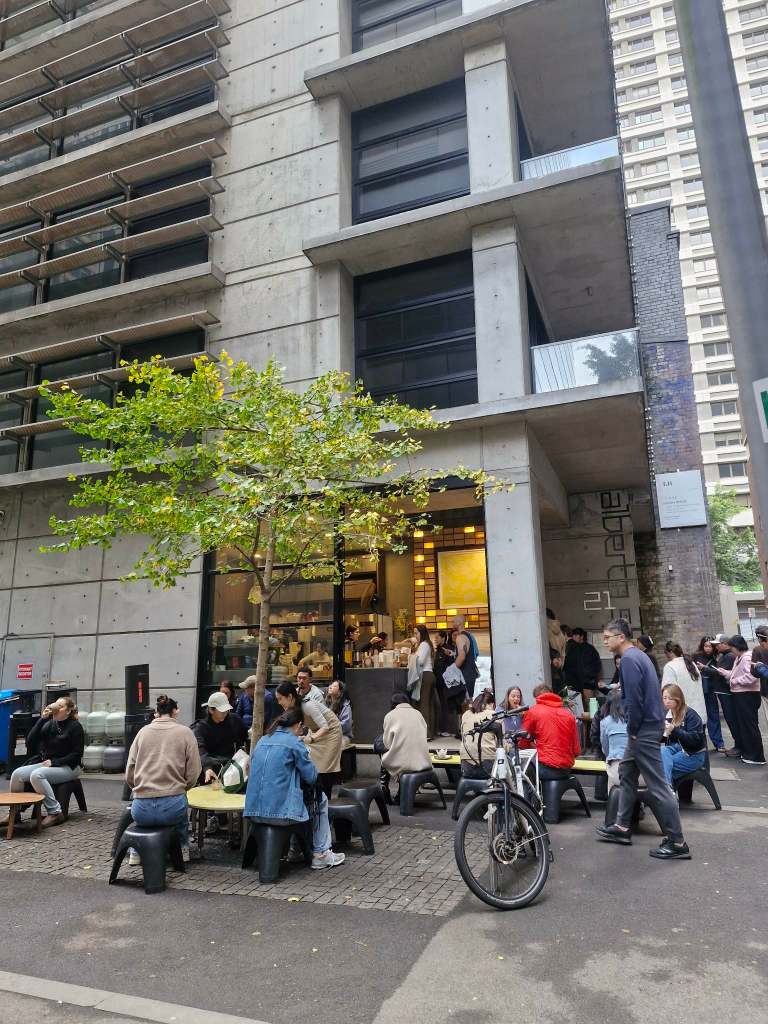
Tucked into the quieter back streets not far from Museum station in Sydney, Parami Café occupies a narrow frontage. The line often stretches out the door and folds around the corner, a slow-moving testament to the fact that word has travelled. Inside and out, the place feels deliberately low to the ground: customers folded onto small tables under the trees, winter blankets draped over knees, the air carrying the soft green scent of properly made matcha.
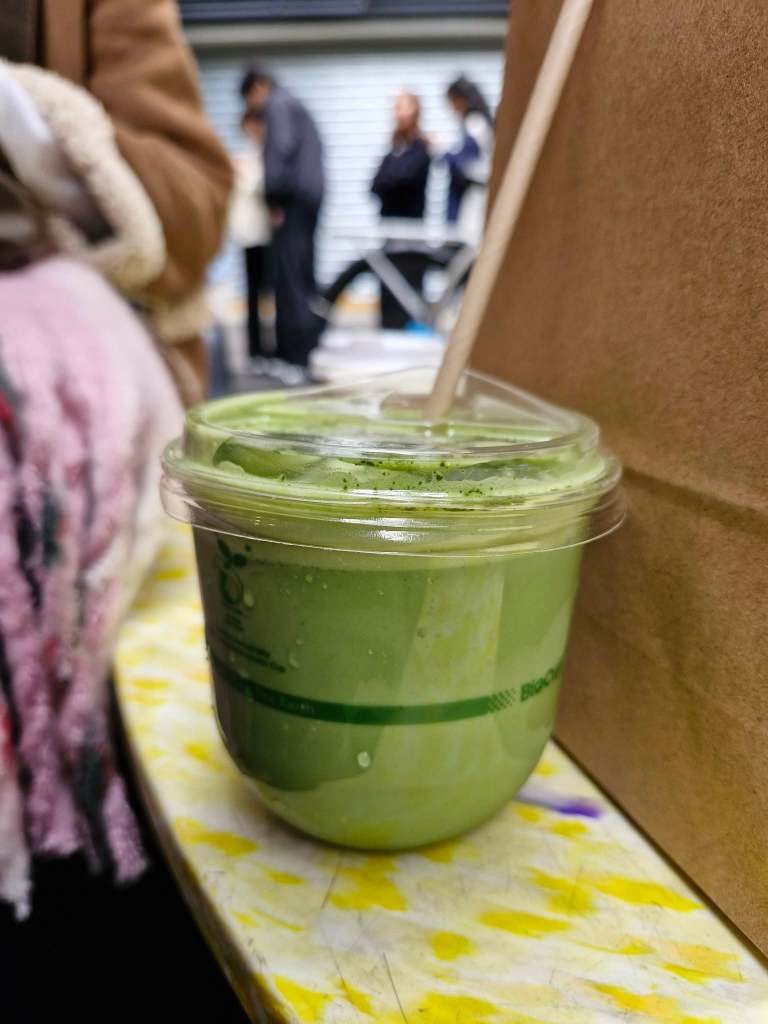
This is not the sweet, bold matcha that has become the default. Here it is built on single-origin Yame from Fukuoka and sweetened, when at all, with honey rather than sugar. The result is quieter, more savoury, light on the palate and faintly mineral at the edges. You can ask for sugar if you want it, and many do, but the version without already feels complete. It is the kind of drink that makes you slow down without being told to.
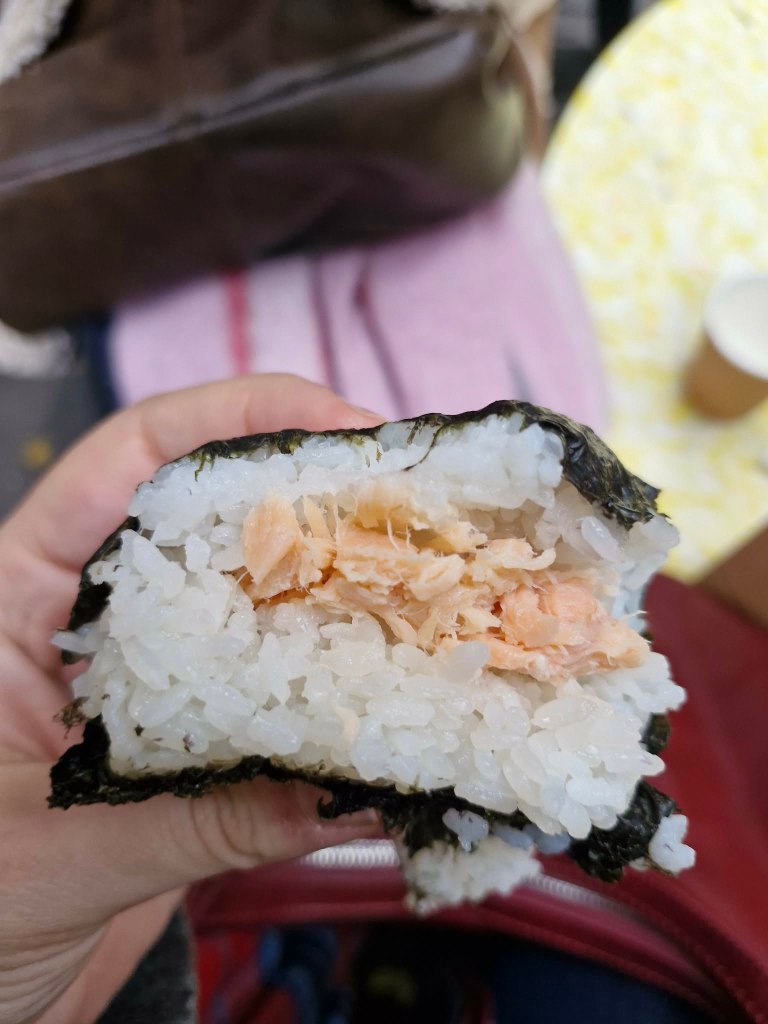
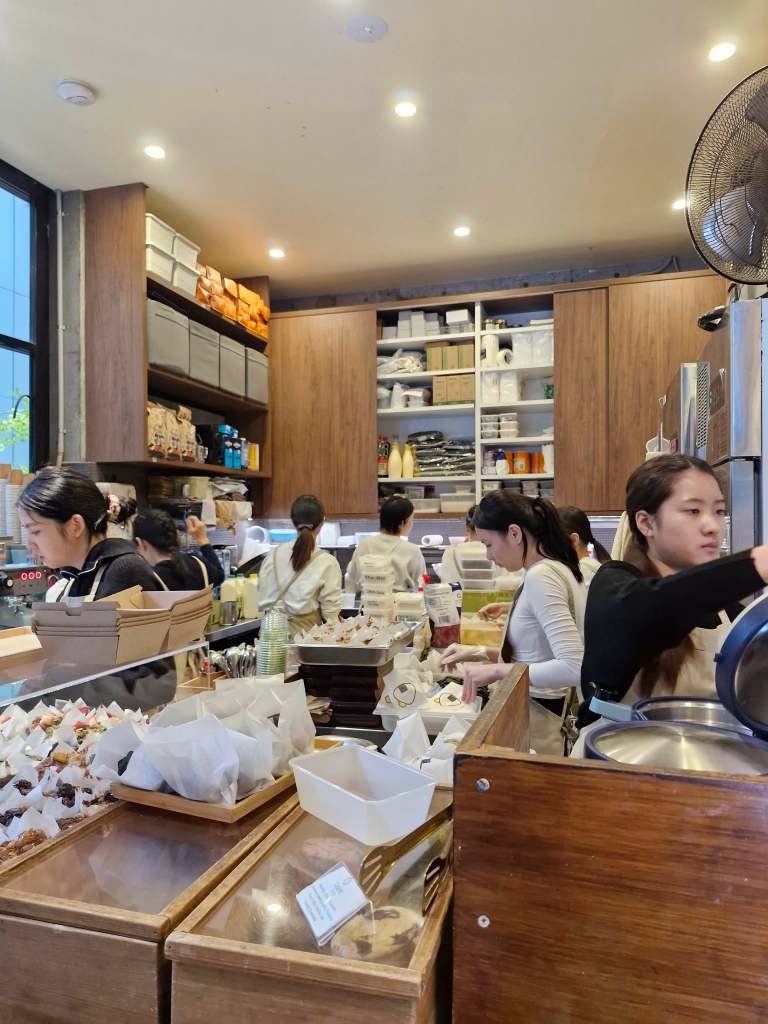
The real reason the line exists, though, is the onigiri. They are made throughout the day in the open kitchen behind the counter, warm rice still soft and slightly sticky, each one filled and wrapped while you watch. The Sha-ke (salmon) is the one that keeps people returning. The fish is salty, just warm enough, and clean in the way that good salmon should be. One bite and the street outside dissolves into the memory of those small Tokyo corner stores where I used to buy a single onigiri every morning, eaten standing up before the day properly began. The rice here has the same quiet comfort; the filling has the same unshowy quality.
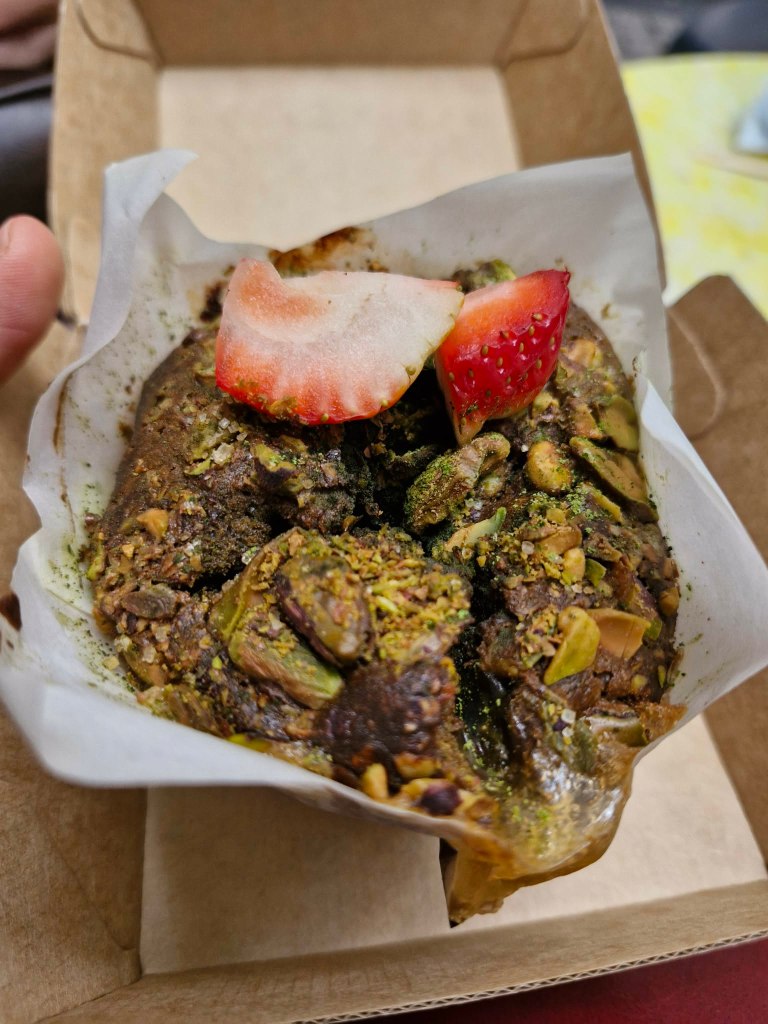
They also bake. On the morning we visited we shared a matcha, strawberry-mochi and pistachio muffin still warm from the oven. The exterior gave a soft crunch before yielding to a centre that was almost molten, sweet without ever tipping into excess. The pistachio brought a creamy, toasted depth; the strawberry cut through with its own bright acidity. It was the kind of pastry that feels lighter than it looks, the sort of thing you finish without noticing and immediately regret not ordering a second.
What lingers longest is the atmosphere of care. Fresh stock is stacked within sight of the queue. Staff move with the calm efficiency of people who have accepted that the line is part of the experience rather than a problem to be solved. Smiles remain genuine even when the orders keep coming. No detail feels rushed, no corner cut. The café does not attempt to interpret Japan or offer a stylised version of it. It simply is a Japanese café in the most straightforward and respectful sense: ingredients chosen with attention, techniques carried out without shortcut, hospitality that never hardens under pressure.
You leave with the residual warmth of rice and the clean finish of Yame matcha still on your tongue, already calculating when the line might be shorter next time, knowing full well you will join it anyway.