Get Sashimi
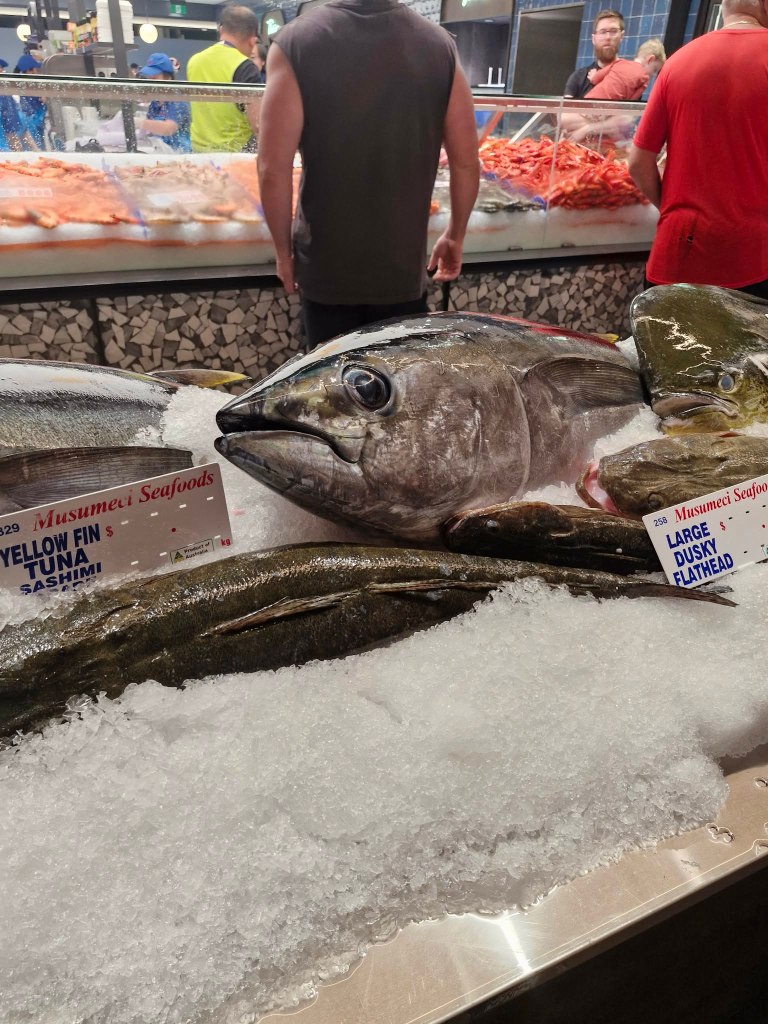
The old Sydney Fish Market lived in the nose first. You stepped through the doors on a Good Friday morning and the air hit you like a wet slap of brine and ice and something faintly metallic that clung to the back of your throat. Crowds pressed in from every direction, shoulders knocking, voices rising over the slap of knives on boards and the wet thud of ice being shovelled. You didn’t so much choose what to buy as surrender to the sheer volume of it: trays of oysters still clenched shut and beaded with seawater, clams rattling in their mesh bags, thick tuna loins the colour of polished rosewood, silvery whiting lined up like soldiers, whole snapper with their eyes still bright. Christmas was worse and better at the same time, the marathon of last-minute shoppers, the same stalls you’d been visiting for years, the quiet satisfaction of walking out with bags so heavy the plastic handles cut into your fingers. You left smelling of the place. That was part of the point.
We carried those memories with us the way you carry the scent of a house you grew up in. So when the new market opened we went, half hopeful, half bracing for the inevitable polish.
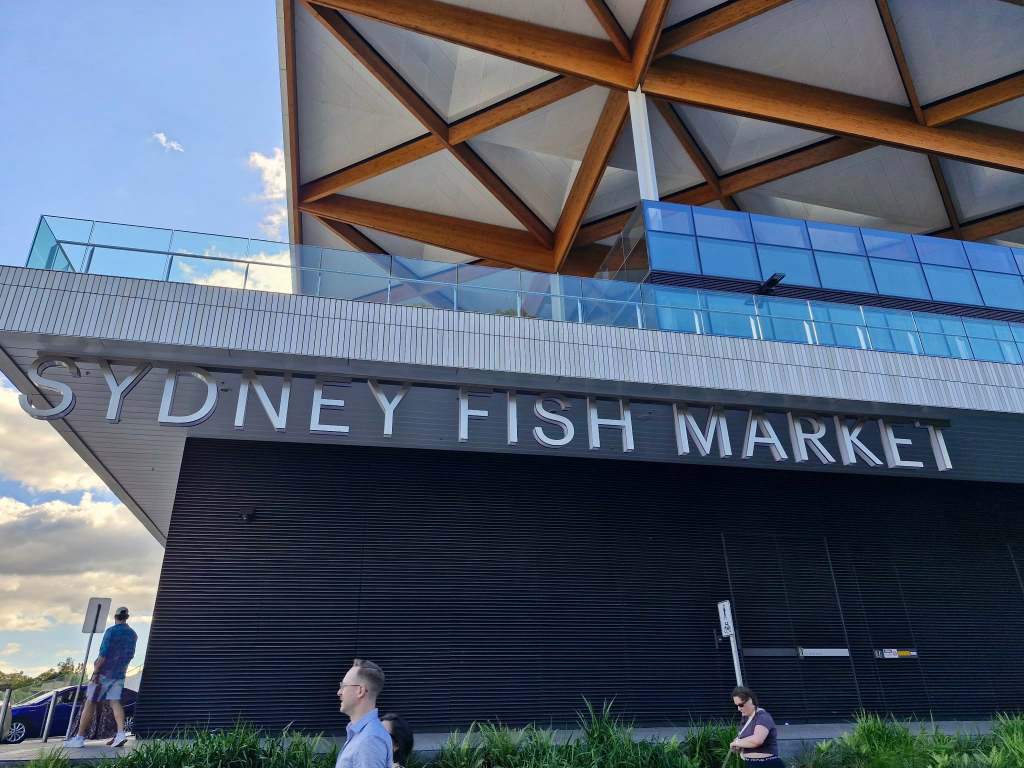
The difference is immediate and almost architectural. The space is vast, deliberately so, all clean lines and pale surfaces that seem designed to refuse any lingering smell. It feels less like a working market and more like a Westfield that happens to sell fish, wide aisles, carefully spaced seating, the soft murmur of people who have somewhere else to be. The soul has been sanded down. The same number of seafood counters occupy the floor, joined by a handful of both new and old restaurants, but the old jostle and urgency have been replaced by something quieter, more considered, almost self-conscious. Every stall offers variations on the same cold-water abundance. Differentiation has narrowed to price and the small courtesies of service.
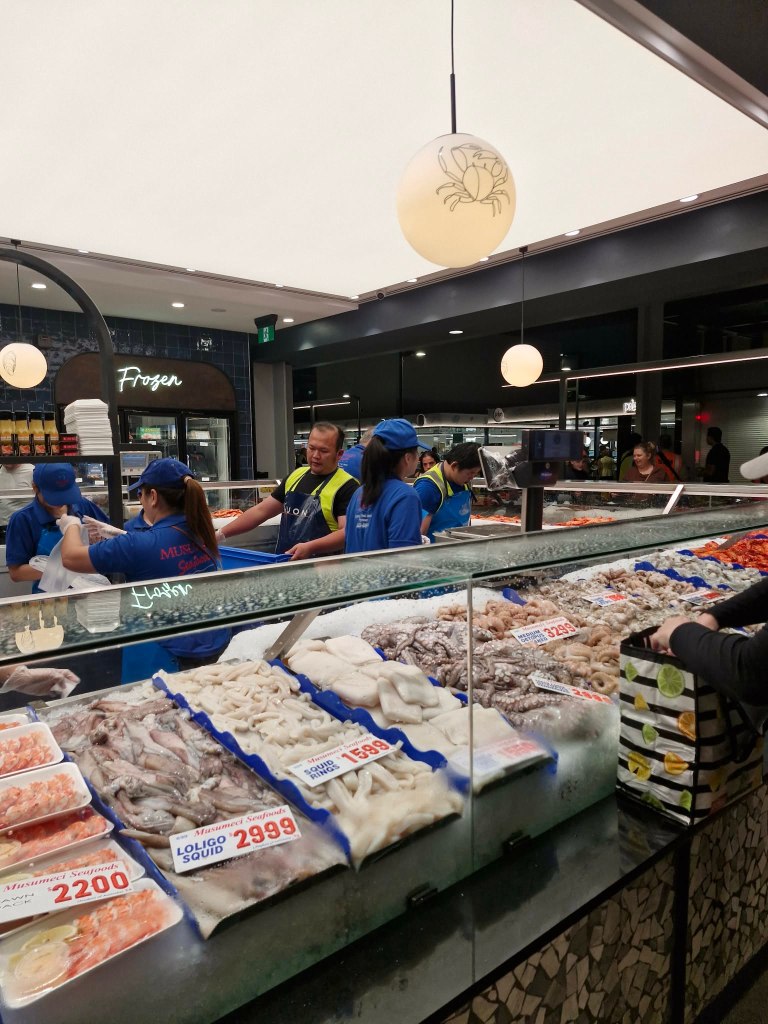
We made for Musimeci Seafood; They still hold the line on value and on the small, vanishing grace of filleting and cleaning without charge. Elsewhere that service has begun to carry a fee; here it remains free, a quiet continuity with the market we remember. We left with the familiar weight of mussels and whole salmon, the plastic bags already starting to sweat in the afternoon heat.
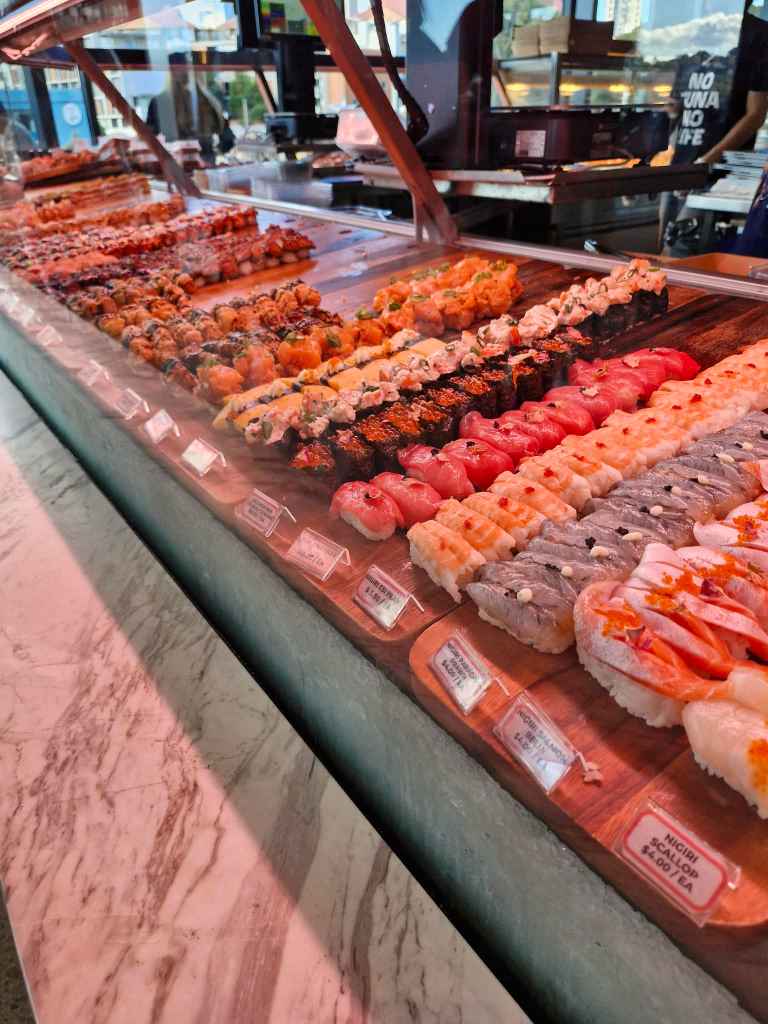
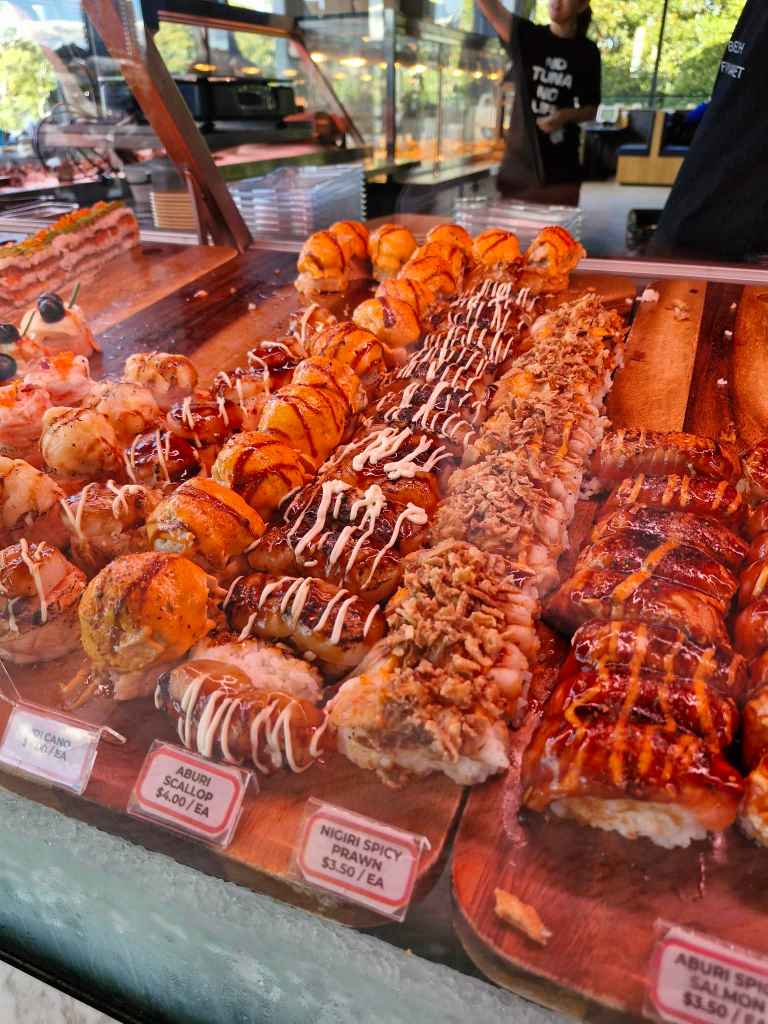
But the real pull, the thing that has kept us coming back, sits a little further along. Get Sahsimi. The sushi counter here is generous without being chaotic: rolls tight and glossy, lobster mornay, crisp seaweed folded into taco shells, trays of sashimi cut thick enough to show the grain, nigiri, maki, futomaki, tuna the deep translucent red of good flesh, salmon that catches the light. We ordered across the board and carried the plates outside.
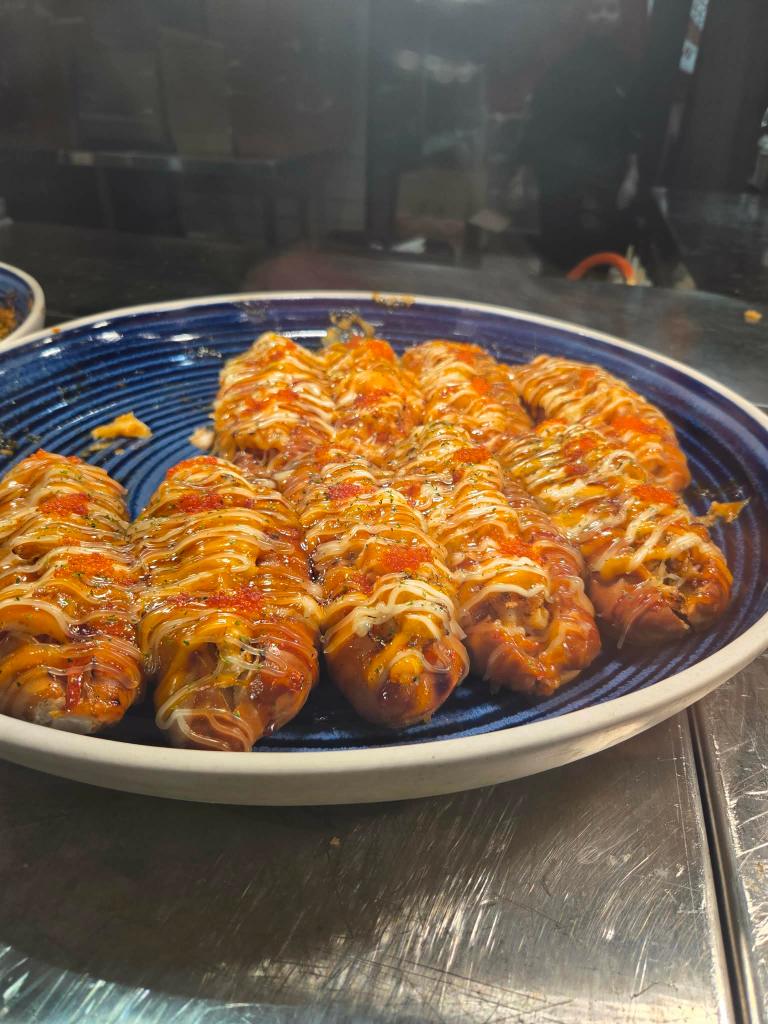
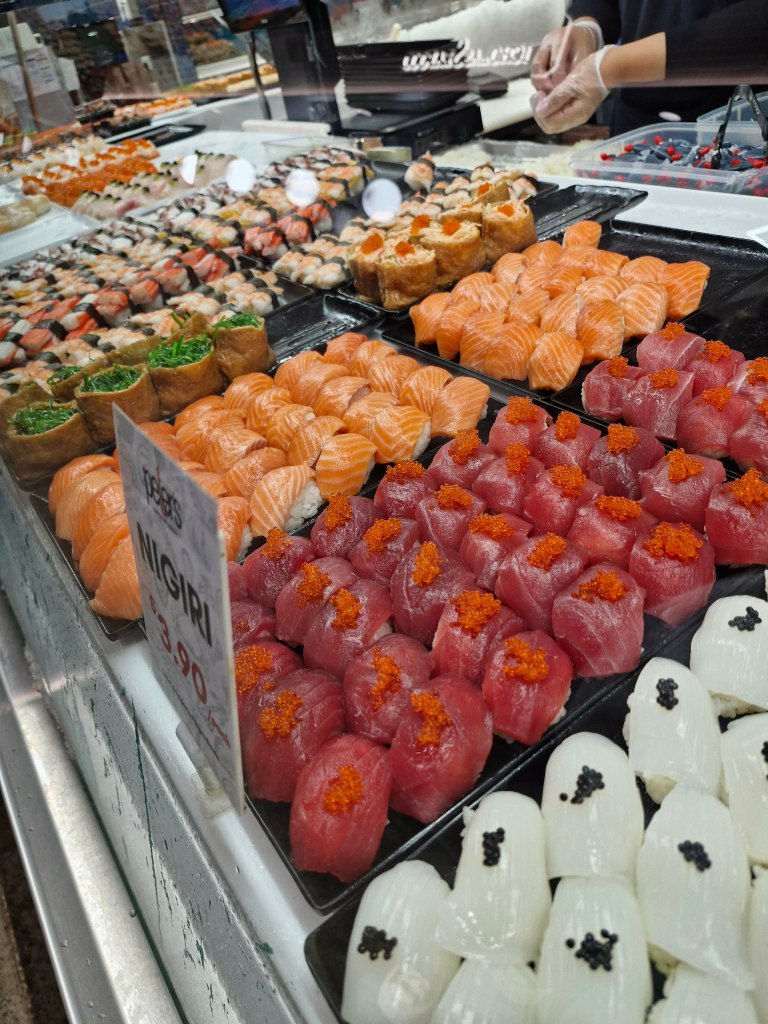
The sushi taco was the one that stayed with us. The nori shatters first, a clean salty crack, then the soft give of rice that still holds a faint warmth, and finally the salmon, slick with teriyaki that has reduced just enough to cling without turning sticky. It is balanced in the way good street food is balanced, nothing overwhelms, everything arrives in the same mouthful. The sashimi needed no sauce. It was cool, almost creamy against the tongue, the kind of clean that announces itself by the complete absence of any fishy edge. You know it is fresh because it tastes of almost nothing except itself and the cold.
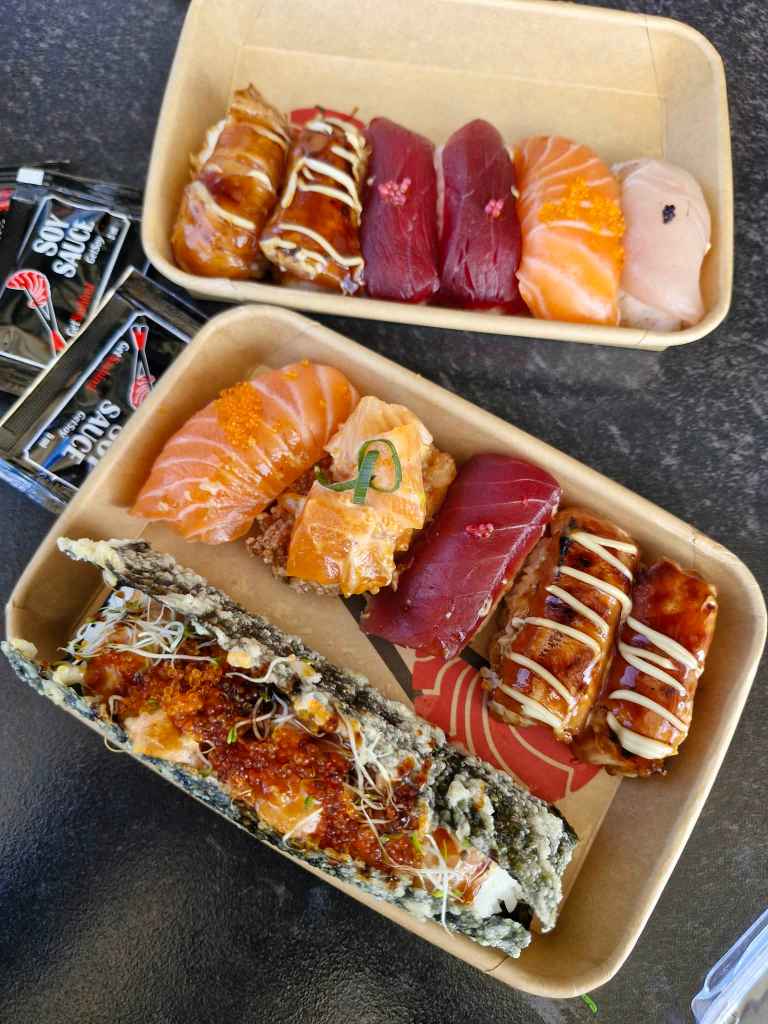
We sat in the sun with more room than we needed, looking out at the Anzac Bridge while the city moved around us. The bags of mussels and salmon rested at our feet. For a few minutes the new market’s sleekness receded and something older remained: the simple pleasure of eating very good fish in the open air, the quiet knowledge that this particular corner has not let us down.